01 / Maintain
The system remains serviceable.
Clear drainage, correct small details, document the condition, and set the next inspection date.
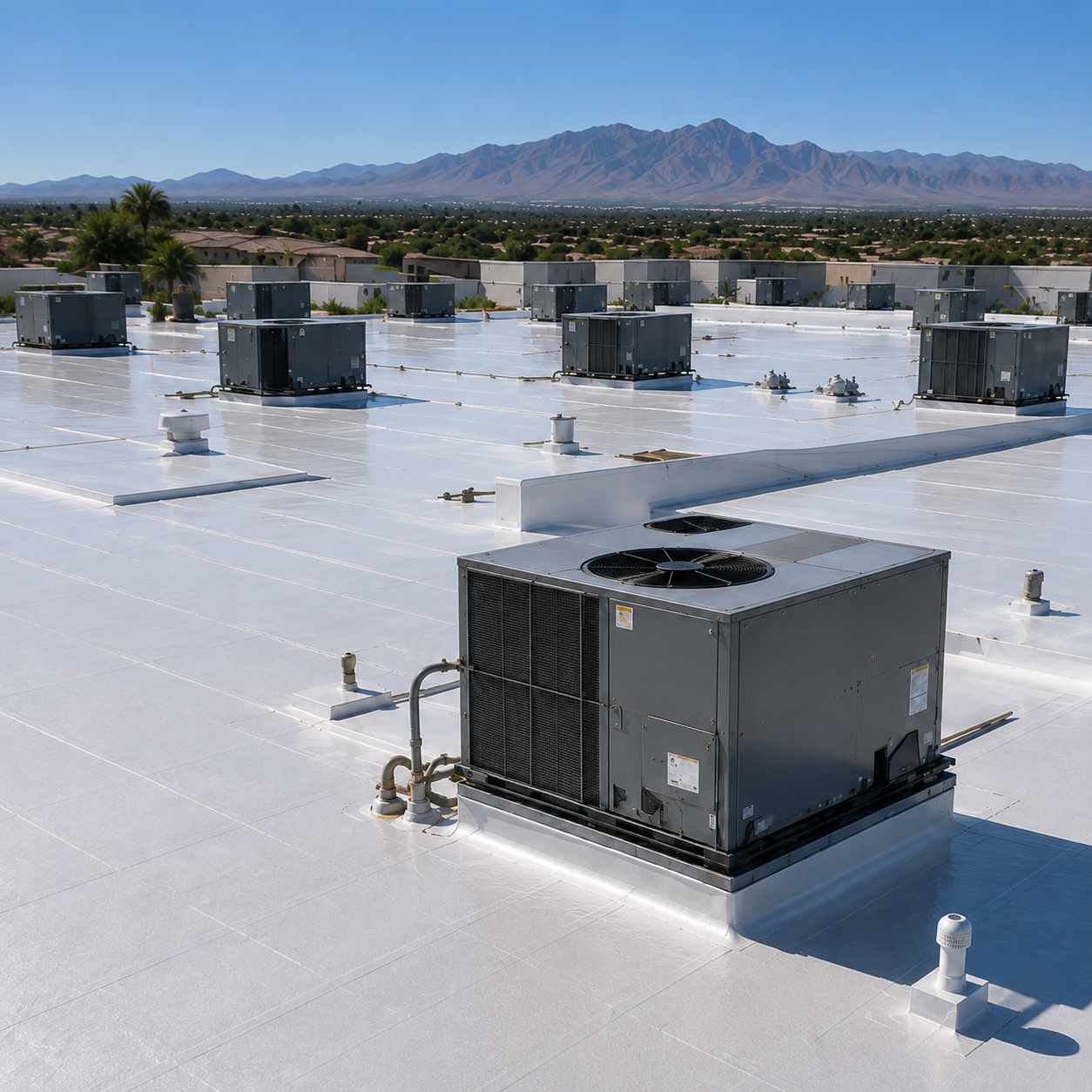
Phoenix commercial roofing · Condition before capital
Inspection, maintenance, repair, restoration, and replacement planned around the roof system and the operations below it.
Condition reporting · Operational planning · AZ ROC #347413
(A useful answer)
The useful output is a documented condition, the work that protects operations now, and a realistic capital path for the years ahead.
Clear drainage, correct small details, document the condition, and set the next inspection date.
Repair details or restore a dry, compatible system when testing and preparation support that path.
Recover or replacement deserves pricing when repair spending no longer protects the building reliably.
(The roof walk)
The field membrane matters, but drains, scuppers, curbs, penetrations, walls, seams, and traffic paths are where commercial risk concentrates.
We record drains, scuppers, slope, debris, staining, and areas where water remains after the rest of the roof dries.
HVAC curbs, pipe penetrations, walls, seams, laps, edges, and previous patches are reviewed as separate details.
Restoration only makes sense when the existing assembly is compatible, structurally sound, and not concealing significant trapped moisture.
(Your condition report)
Ownership and management should be able to see current risk, near-term work, and the capital path without walking the roof themselves.
Two drains clear; southwest scupper restricted by debris.
Most details sound; one aging repair needs targeted work.
Reflective surface aging consistently; no broad visual failure.
Price maintenance now and evaluate restoration window.
(How it works)
Commercial work is roofing plus logistics. Access, tenants, HVAC, odor, noise, staging, and documentation are planned before the schedule is set.
Survey roof zones, drainage, equipment, details, traffic, and previous work.
Condition record
Investigate concealed moisture or compatibility before committing to restoration.
Viable options
Coordinate access, tenants, air intakes, shutdowns, staging, noise, and odor.
Project logistics
Document covered details, complete the work, and deliver closeout records.
Building file
Multi-property programs can use the same reporting format across sites so ownership can compare condition and prioritize budget.
(Four capital paths)
The right path follows moisture, compatibility, structure, drainage, service life, and annual repair spend rather than the largest available scope.
(Local and accountable)
Verify licensing, insurance, training, local presence, and reporting capability before work begins over an operating property.
15+
Arizona pitched and low-slope roofing knowledge across building types.
A+
Top Better Business Bureau rating for trust and marketplace conduct.
5.0
★★★★★Rated 5 out of 5 stars by customers on Google.
GAF
Factory-trained installation backed by manufacturer standards.
(Commercial roofing questions)
A condition report should answer what the roof needs now, what can wait, and what belongs in capital planning.
Service life varies by system, installation, drainage, exposure, and maintenance. Two roofs installed the same year can be in very different condition if one had drains cleared and details maintained while the other did not. A documented roof walk provides a more useful answer than a generic age range.
Coating can be a strong restoration option when the existing assembly is compatible, prepared correctly, structurally sound, and free of significant trapped moisture. Coating over a wet roof can conceal continuing deterioration, so testing or selective investigation may be appropriate before committing.
Noise, odor, access, staging, deliveries, and HVAC coordination can affect operations, but most impacts can be planned. We discuss sensitive occupancies, air intakes, working hours, tenant notice, shutdowns, and customer access before setting the schedule.
Twice yearly works well in Phoenix: before monsoon season to clear drainage and correct vulnerable details, and after the season to document storm effects. Add a walk after significant weather and follow any inspection or maintenance requirements from the roof system manufacturer.
Common causes include blocked drains or scuppers, inadequate slope, settlement, or structural deflection. Start by clearing drainage safely and documenting how long water remains. Persistent ponding may require slope correction, drainage modification, or a roofing-system solution.
Yes. A consistent reporting format across a portfolio makes roof condition easier to compare, supports capital planning, and helps budget follow actual need. Inspection frequency and scope can be adjusted by building type, system, age, warranty requirements, and operational risk.
(Know the condition)
Build a current condition record and a maintenance or capital plan ownership can use.