
01 / Schedule
Damage, but no water entry.
Missing material or a concern that remains watertight can be inspected during normal hours before the next storm.
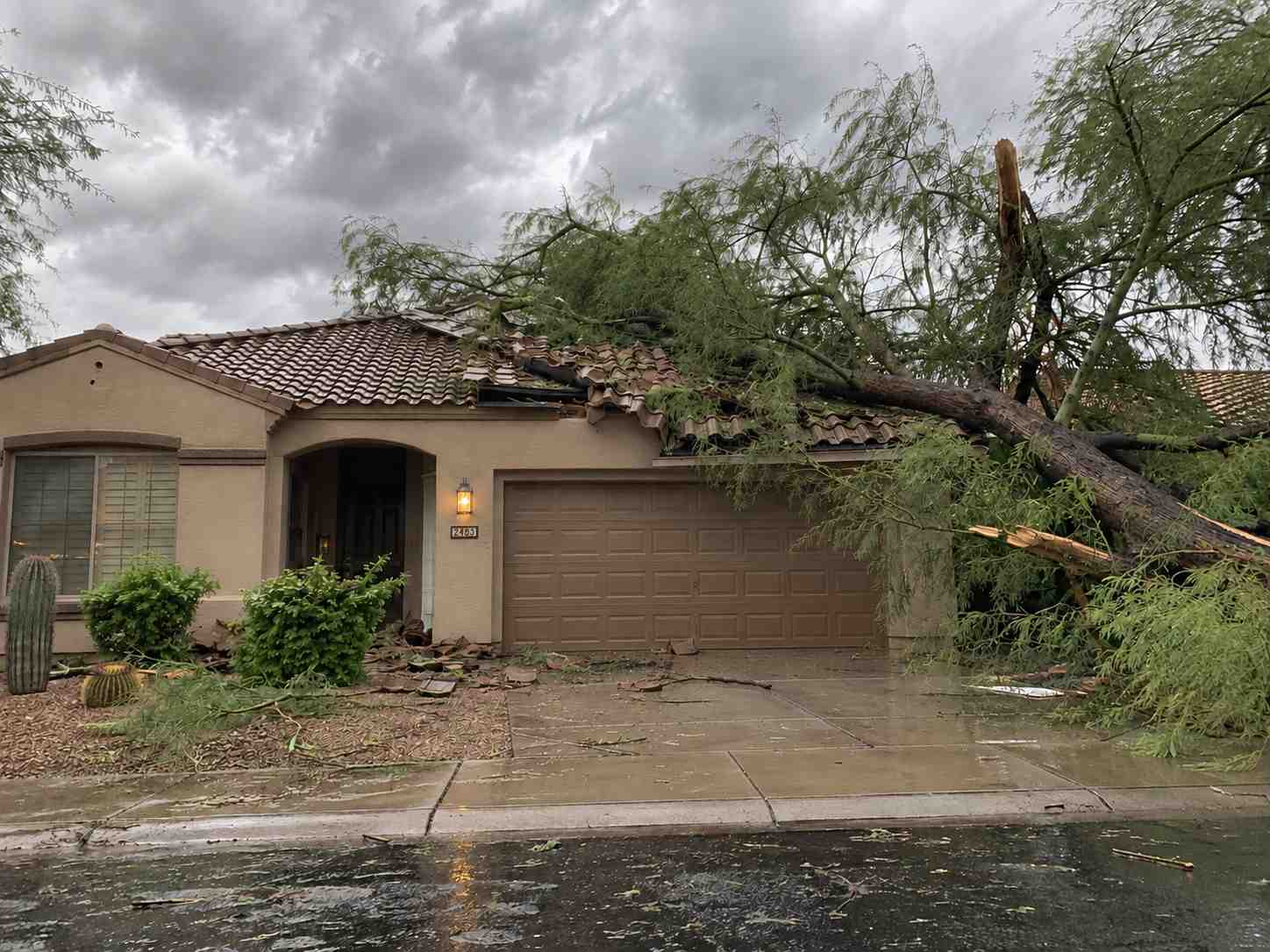
Phoenix emergency roofing · Safety first
Temporary protection for active leaks and storm openings, followed by a dry-weather inspection and permanent roofing plan.
We stay ready to help; timing depends on weather, safe access, and crew availability
(Is it an emergency?)
Active interior water, an open roof, sagging ceiling material, or water near electrical fixtures deserves immediate attention. Visible damage that is still watertight can usually be scheduled.
Missing material or a concern that remains watertight can be inspected during normal hours before the next storm.
Protect people and belongings, contain what you safely can, and call so temporary protection can be planned.
Stay clear of sagging ceilings and wet fixtures. Shut off the affected circuit only if you can do so safely.
(The first response)
Emergency roofing is a sequence. Interior safety comes first, temporary exterior protection comes when conditions allow, and permanent roof repair follows on a dry roof.
Move people, pets, electronics, and valuables away from water and unstable ceiling material.
Use containers and towels where safe. Avoid wet electrical fixtures and do not enter a flooded attic.
A crew can tarp or dry in the affected area once wind, lightning, access, and roof conditions are safe.
Tell us whether water is active, where it appears, what the weather is doing, and whether roof material is visibly missing.
Temporary tarping, dry-in material, or localized protection is selected around the damage and the roof system.
Once conditions are dry, the temporary protection is opened as needed and the underlying failure is inspected properly.
(The response plan)
Emergency work should document what was found, what was installed, what remains open, and when the permanent inspection should happen.
Active water location and immediate safety concerns recorded.
Weather, surface, structure, and safe approach evaluated.
Covered area, fastening method, and limitations documented.
Dry-weather inspection and repair scope still required.
(How it works)
During widespread storms, response order depends on life safety, active water, open roof areas, weather, and safe crew access across the Valley.
Describe the water, location, roof damage, weather, and immediate safety issues.
Response priority
Move people and property, contain water, and avoid unstable or energized areas.
Safer occupied space
Install temporary exterior protection when roof and weather conditions are safe.
Temporary weather barrier
Return in dry conditions to diagnose and complete the permanent roofing work.
Permanent scope
If water is near electrical equipment, fire, or a structural collapse risk, contact emergency services or the appropriate utility before roofing dispatch.
(Temporary or permanent)
Temporary protection buys safe planning time. Permanent roofing restores the assembly once conditions allow proper preparation and integration.
(Local and accountable)
Storm urgency should not erase normal contractor checks: Arizona license, insurance, local presence, written pricing, and accountable follow-up.
15+
Practical Arizona storm response and permanent roofing knowledge.
A+
Top Better Business Bureau rating for trust and marketplace conduct.
5.0
★★★★★Rated 5 out of 5 stars by customers on Google.
GAF
Factory-trained installation backed by manufacturer standards.
(Emergency roofing questions)
Weather and Valley-wide call volume affect response timing, but the safety and roofing sequence stays consistent.
Timing depends on location, weather, roof access, and call volume across the Valley. During a major storm, crews prioritize active water, open roof areas, and safety risks. We will tell you the realistic dispatch window when you call and discuss interior protection while you wait.
Sometimes, but crew safety determines access. Lightning, high wind, slick tile, or storm-damaged decking can make roof work unsafe until conditions ease. Temporary protection begins as soon as the roof can be approached without creating another emergency.
A tarp is temporary protection, not a seasonal roof system. Arizona sun and wind degrade temporary materials and fasteners. Schedule the permanent inspection and repair as soon as safe, dry conditions and material availability allow.
Many policies expect reasonable steps to reduce further damage after a covered event, but your insurer decides whether your situation and costs qualify. Keep receipts and photographs, notify the insurer promptly, and follow the loss-related instructions in your policy.
Keep people and belongings away from the area because wet ceiling material can release suddenly. Avoid nearby electrical fixtures and do not enter a wet attic. If water is near electricity or there is a structural concern, contact the appropriate emergency professional before entering the area.
The immediate dispatch priority may decrease, but trapped moisture can continue damaging insulation, decking, and ceiling material. Arrange an inspection promptly, especially during monsoon season when another storm may arrive before the assembly dries or the opening is repaired.
(Active leak?)
We will help you identify the safety priority, discuss immediate interior protection, and give you a realistic response window.