
01 / Repair
The failure is still local.
If the surrounding roof can support a lasting repair, we explain that before pricing a larger project.
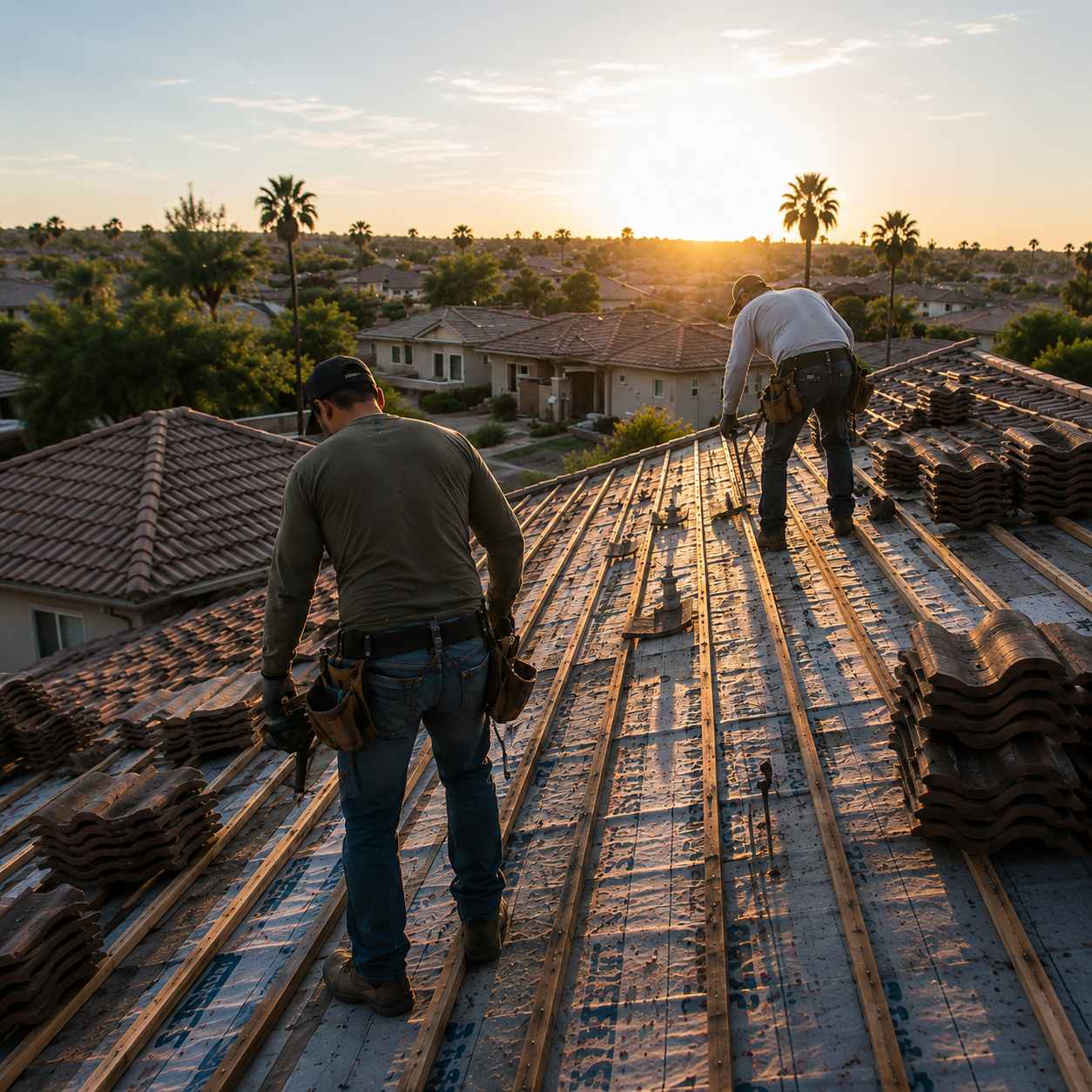
Phoenix roof replacement · System before finish
A complete roofing assembly, a documented scope, and one accountable crew from tear-off through final walkthrough.
System options · Written scope · AZ ROC #347413
(A useful answer)
The first decision is whether the waterproof system is failing broadly. The second is which assembly fits the building, the existing roof, and the way you plan to own it.
If the surrounding roof can support a lasting repair, we explain that before pricing a larger project.
Concrete or clay tile may be reusable even when the underlayment beneath it has reached the end.
Recurring leaks, brittle waterproofing, or broad deterioration make a complete scope worth comparing.
(The roofing system)
A Phoenix roof replacement is a coordinated assembly: structure, deck, waterproofing, flashing, ventilation or drainage, and the material you see from the street.
We inspect what can be seen before tear-off and state how hidden sheathing replacement will be documented and priced.
Underlayment or membrane, flashing, penetrations, valleys, and edges are selected as one water-management system.
Tile, shingle, foam, or another low-slope assembly is compared against weight, geometry, maintenance, appearance, and budget.
(Your replacement scope)
The material name is not a complete estimate. A useful scope defines removal, preparation, details, allowances, installation, cleanup, and closeout.
Layers removed, landscaping protected, debris and delivery plan defined.
Included quantity and per-sheet rate for concealed damage.
Underlayment, flashing, penetrations, finish, ventilation, and drainage.
Cleanup, walkthrough, photos, product documents, and warranty terms.
(How it works)
The schedule is built around keeping the property protected while each old layer is removed and each new detail is documented.
Measure the roof, review conditions, compare systems, and define the written scope.
Condition and options
Schedule materials, access, protection, deliveries, disposal, and daily cleanup.
Project plan
Remove, inspect, document, repair the deck, and install the approved assembly.
Progress photos
Complete cleanup and walkthrough, then deliver product and warranty records.
Closeout packet
Most homeowners remain in the house. Expect daytime noise and vibration, especially during tear-off.
(System options)
Pitch, structure, drainage, existing material, appearance, and maintenance priorities determine which systems deserve a real comparison.
(Credentials and reviews)
Verify the Arizona license, accreditation, customer rating, and manufacturer training before selecting a replacement contractor.
15+
Arizona installation knowledge across pitched and low-slope systems.
A+
Top Better Business Bureau rating for trust and marketplace conduct.
5.0
★★★★★Rated 5 out of 5 stars by customers on Google.
GAF
Factory-trained installation backed by manufacturer standards.
(Roof replacement questions)
The exact schedule and price follow the roof, but these are the practical questions Phoenix homeowners ask first.
Most residential replacements take days rather than weeks. A straightforward shingle roof is usually faster than a tile relay, and steep pitch, multiple roof planes, penetrations, weather, or concealed deck repair can extend the schedule. Your estimate should include an expected duration and a process for communicating changes.
Price depends on measured area, pitch, access, existing layers, system type, flashing, tile reuse, and deck condition. A useful number requires an inspection and a written scope. We provide an itemized estimate after seeing the roof rather than presenting a sight-unseen range that may not describe your project.
Often. Concrete and clay tile can outlast the underlayment beneath them. A tile relay removes and stacks serviceable tile, replaces the waterproofing, then reinstalls the tile with broken pieces replaced. The inspection must confirm that the profile and overall tile condition make reuse worthwhile.
We photograph the damage and replace approved areas before covering the deck. Because concealed damage cannot be measured accurately before tear-off, the original estimate should state any included allowance and the unit price for additional sheets. That keeps the decision documented while the roof is open.
Most people stay home, but tear-off and fastening are loud and vibration carries through the structure. Secure wall hangings, protect belongings in the attic, and plan around work-from-home calls, children, or pets that are sensitive to noise. We explain the daily working schedule before the project starts.
Manufacturer warranties cover eligible materials and workmanship coverage addresses installation. Terms, exclusions, maintenance requirements, and registration vary by system. We identify the applicable documents in the proposal and provide the final paperwork at closeout rather than relying on a marketing-only year count.
(Plan it clearly)
Start with the roof condition, compare viable assemblies, and receive a scope you can evaluate line by line.